

Introduction
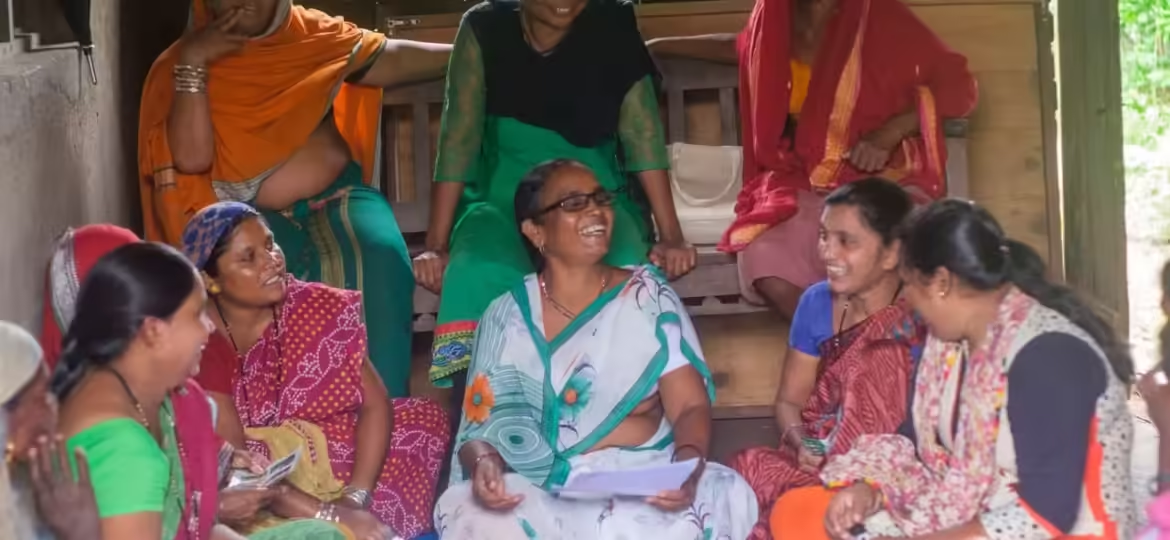
Women farmers cooperatives in India play a critical role in shaping how agriculture responds to climate risk, markets, and inequality. They operate at the intersection of multiple vulnerabilities. They face climate uncertainty, rising input costs, volatile markets, and limited institutional access. These challenges intensify when farming is done individually, where every shock is absorbed at the household level.
SEWA Cooperative Federation’s experience across agriculture, dairy, handicrafts, and allied trades shows that cooperatives fundamentally change this equation. They do not merely improve incomes. They alter how risk, power, and opportunity are distributed.
The seven points below draw from SEWA Federation’s field experience, research, and policy engagement to explain what cooperatives make possible for women farmers, in ways that individual effort cannot.
1. Storage becomes a strategic decision, not a distress response
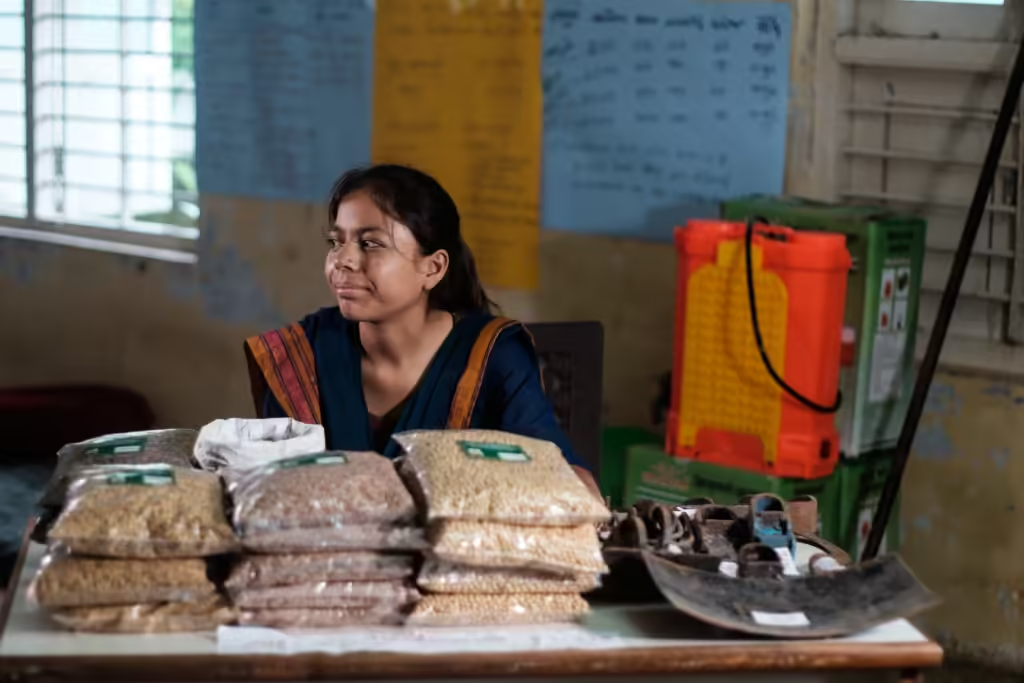
For most small women farmers, the moment of harvest is also the moment of compulsion. Crops must be sold quickly, often at unfavourable prices, because storage is unavailable or unaffordable.
Cooperatives interrupt this pattern. When storage is organised collectively, selling becomes a decision rather than a necessity. Women farmers gain the ability to wait, watch price movements, and plan sales strategically. SEWA Cooperative Federation’s work on market linkages shows that even short delays in selling can significantly improve price realisation.
Storage, in this sense, is not infrastructure alone. It is a shift in power over time.
2. Negotiation shifts from individual vulnerability to collective leverage
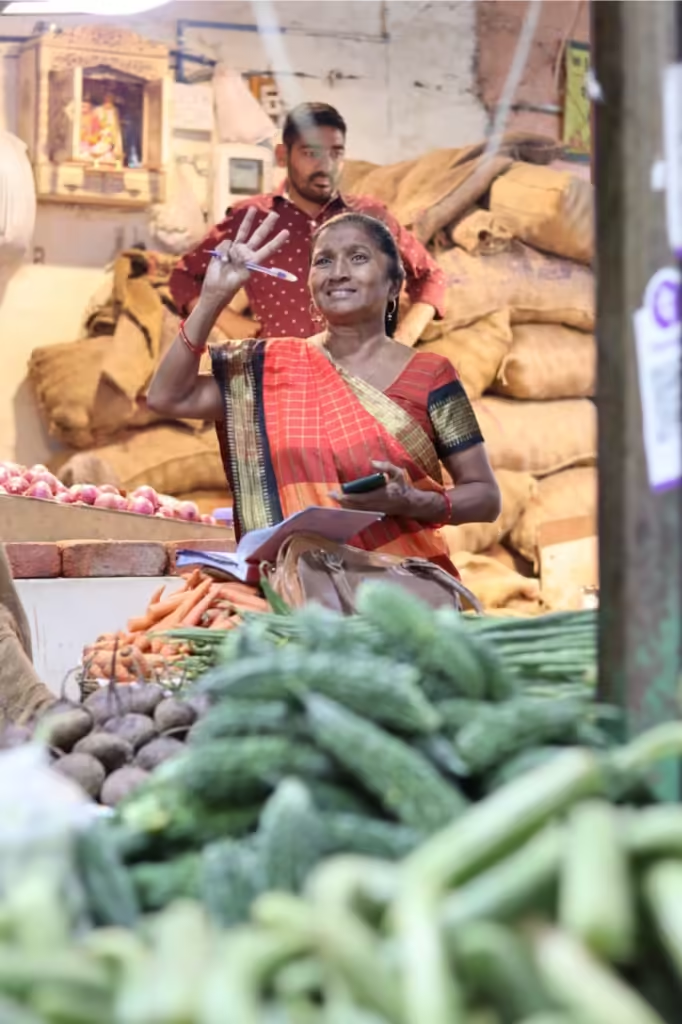
Negotiation looks very different when done alone. Individual farmers often negotiate from a place of urgency, with limited information and little room to refuse unfair terms.
Within a cooperative, negotiation becomes structured. Produce is aggregated, quality is standardised, and volumes are predictable. Buyers respond differently to this configuration. Prices, deductions, and timelines can be questioned. SEWA Federation’s policy work repeatedly shows that collective negotiation reduces arbitrary pricing and exploitation, particularly in dairy and vegetable value chains.
What changes is not only the outcome, but the confidence to negotiate at all. Here’s our work on market access.
3. Input costs reduce when risks and investments are shared
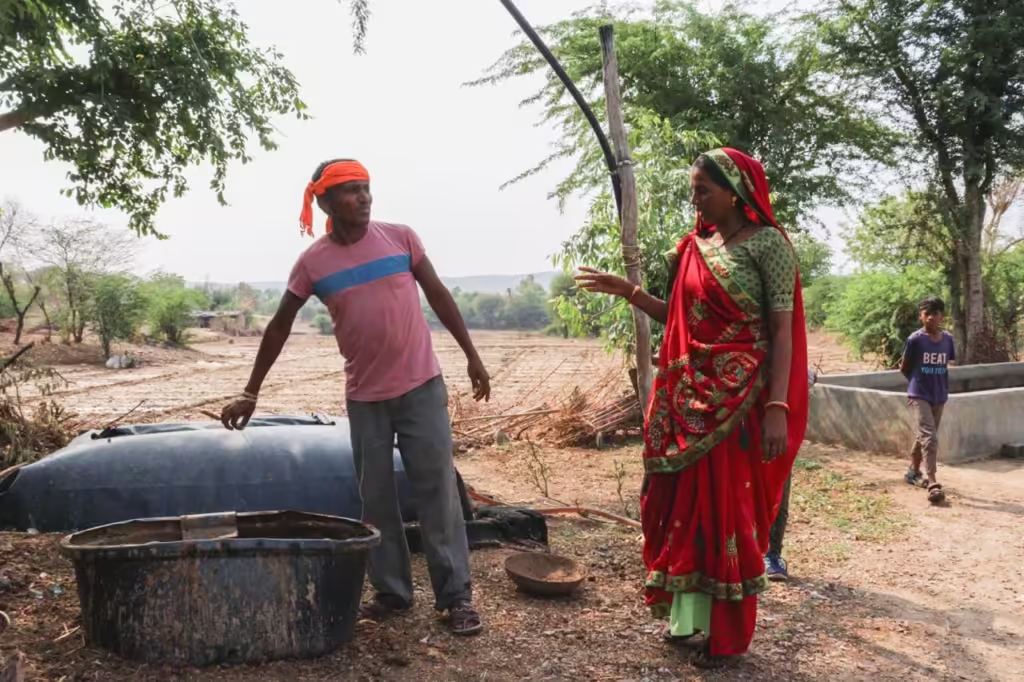
Rising input costs are one of the biggest sources of anxiety for women farmers. Seeds, fertilisers, fodder, and equipment purchases are often financed through short-term borrowing at high interest.
Cooperatives create room for planning. Inputs can be purchased in bulk. Equipment can be shared. Decisions can be taken collectively before the season begins. Over time, this reduces dependence on debt and stabilises cash flow. SEWA Cooperative Federation’s Women’s Enterprise Support System (WESS) treats this kind of cost planning as central to enterprise viability, not as a secondary benefit.
Lower costs emerge not from subsidy alone, but from coordination.
4. Markets expand beyond the local trader
Many women farmers remain confined to local traders, not because of preference, but because alternatives are inaccessible. Formal markets demand volume, documentation, and consistency.
Cooperatives act as intermediaries on the farmer’s behalf. They handle aggregation, compliance, and buyer engagement. This opens pathways to institutional buyers, government procurement, and organised retail. SEWA Federation’s experience shows that once cooperatives manage these interfaces, markets stop being opaque and intimidating.
Access changes not because farmers become bigger, but because institutions adapt to collective forms.
5. Knowledge circulates through trust, not instruction
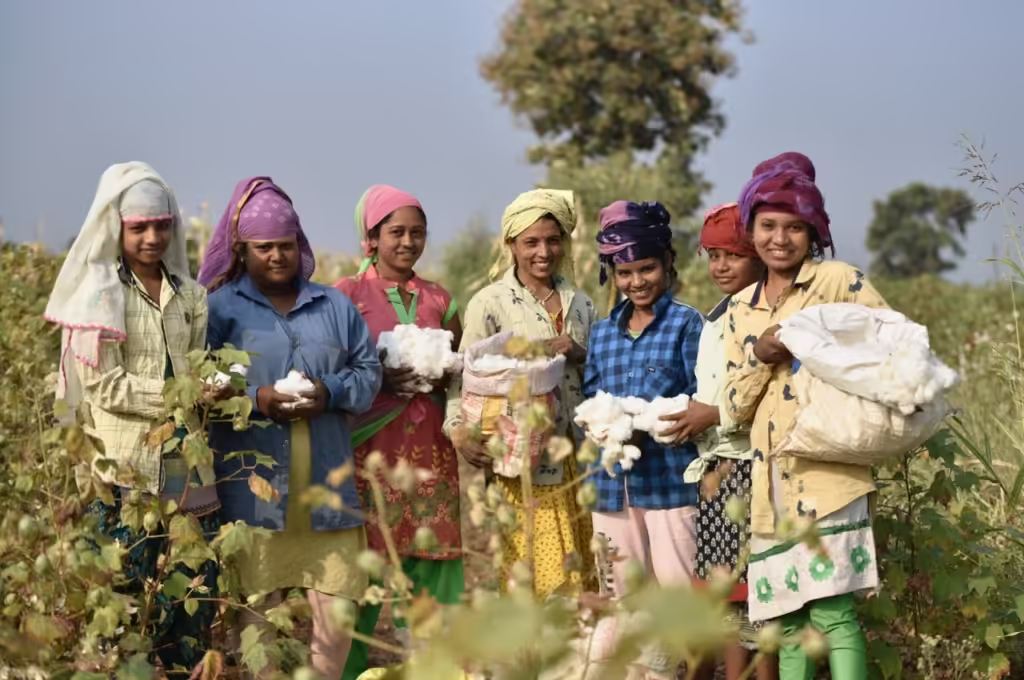
Agricultural knowledge does not travel well when delivered only through advisories. SEWA Federation’s climate and agriculture work consistently finds that adoption improves when farmers see practices working in fields like their own.
Cooperatives enable this kind of learning. Women farmers observe each other’s crops, discuss failures openly, and test practices together. Soil health, natural inputs, water management, and crop choices are debated, not dictated. Knowledge spreads sideways, through trust and familiarity.
This is particularly important for climate adaptation, where local context determines success.
See how women farmers are learning climate resilience here.
6. Climate risk becomes manageable when it is collective
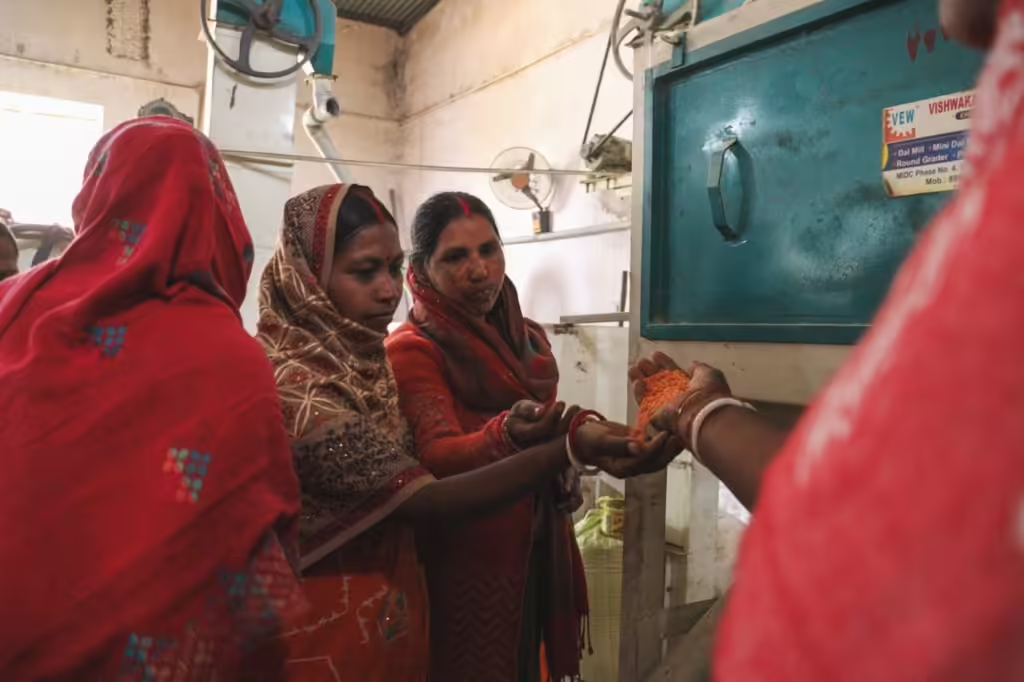
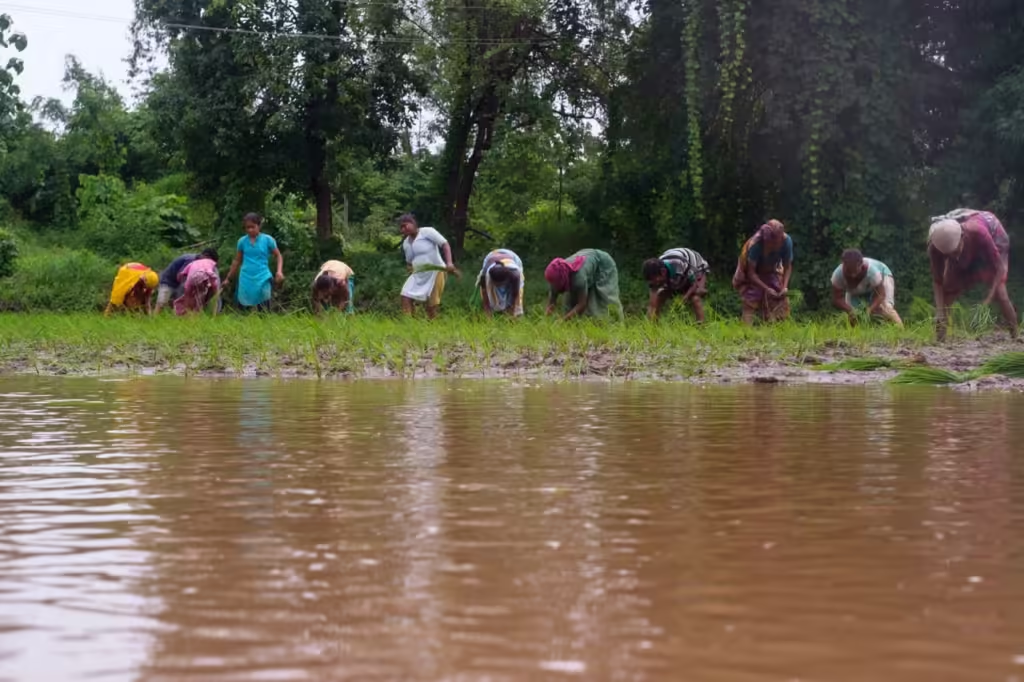
Climate shocks are now a regular feature of farming. For individual farmers, one failed season can undo years of effort.
Cooperatives do not eliminate this risk, but they change its consequences. Diversification across crops and incomes, collective savings, and access to insurance reduce the likelihood of irreversible loss. SEWA Federation’s resilience frameworks emphasise this difference between absorbing shocks and being overwhelmed by them.
The presence of a collective does not prevent uncertainty. It prevents isolation.
7. WOmen get institutional voice, not just income
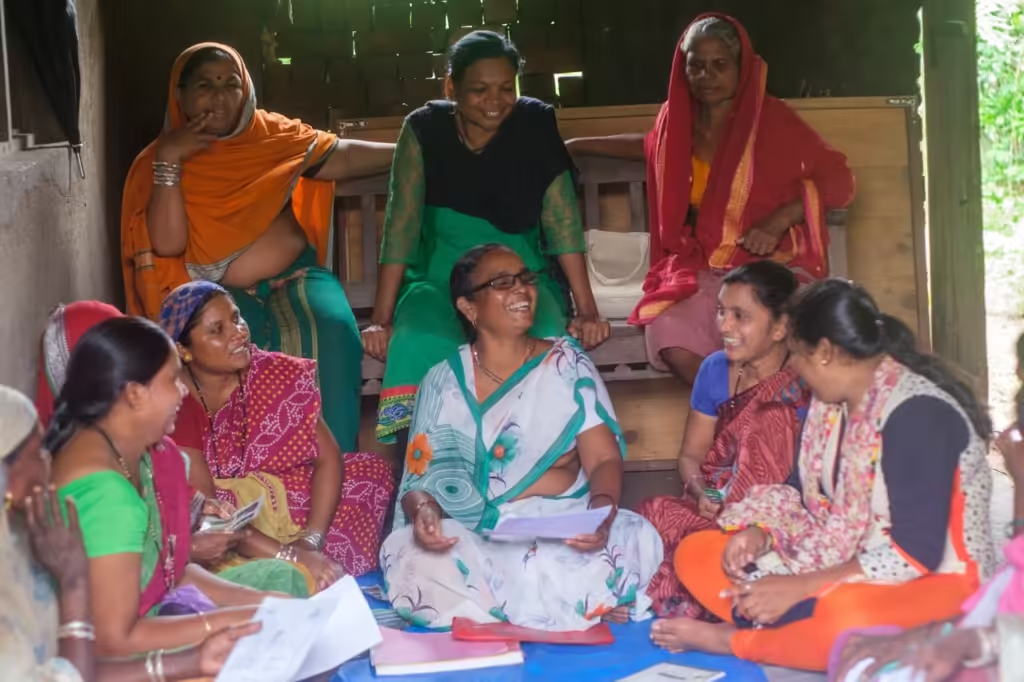
The most profound change cooperatives enable is not economic, but institutional. SEWA Federation’s governance work shows that women farmers gain platforms to speak, represent, and negotiate when they act collectively.
Through cooperatives, women engage with banks, markets, and government systems as representatives rather than recipients. Their concerns enter decision-making spaces where rules are shaped. This shift is slow, but it is structural.
See how Vatrak Women Farmer Cooperative undergoes it’s AGM, led by women farmers themselves.
Why this matters
For women farmers cooperatives in India, resilience is built through collective ownership, not individual survival. At SEWA Cooperative Federation, we do not see cooperatives as support structures for individual farmers. We see them as vehicles for women farmers to achieve full employment and self-reliance.
Our work focuses on building women-led cooperatives that can store, negotiate, learn, absorb risk, and shape markets — not just survive within them. Because long-term resilience comes collective ownership and shared power.
Conclusion
Women farmers cannot face climate uncertainty, market volatility, and structural inequality alone. Cooperatives make it possible to plan beyond the next season and build futures that are economically and socially secure.
The experience of women farmers cooperatives in India shows that collective organisation is essential for long-term economic and social security.
This article is authored by Jasmeet Singh, Communications Lead at SEWA Cooperative Federation.
