

Field par jaana ek bohot humbling experience hota hain. Is baar hum Navsari, Valsad ke gaon mein hamare fellows ke collective ka kaam samajhne gaye. 25–26 February ko hum Rangpur ki Sushilaben, Anklachh ki Sumitraben aur Dholumber ki Jayshreeben se mile, teeno apne-apne gaon ke collectives ka hissa hain. Their dialect, a mix of Gujarati and Marathi. Valsad station se utarte hi, hum Lachhakadi mein BAIF ke campus ke liye ravana hue. Ye campus sundar, saaf aur accessible tha, dono trainers aur pass wale gaon ke trainees ke liye. Humara samaan utaarkar hum nikal pade humari film banane ke liye.
Sushilaben & Ujjas Mahila Khedut SANGATHAN
Sushilaben ne hume Google Maps se apne ghar ka location bhej rakha tha so humare liye ya kaafi aasan raha. Phone par coordination ke vakt aisa decide hua tha ki wo hume lunch karaaenge. Unhone specifically mention kiya “Saadu khavanu j che”. That meant she would be able to feed simple food only. Esa sunke bohot interesting lagta hain ki gaon ke log outsiders ke baare mein kya sochte hain. Hum poch gaye unke ghar. Unhone hume welcome kiya, paani diya. Ese moments mein bohot zaroori hain aap mana naa kare, lips ko glass se touch kar, unke steel ke glass se paani pee le. This reminds me of something my professor used to say, “Hygiene is caste in India”. Aur ye thi humari Adivasi behene.
Iske baad maine apna phone nikala aur shoot karna start kiya. Unka collective Ujjas Manhila Khedut Sangathan jo organic inputs banakar bechta hain uska kaam chal rha tha. Ghar ke baramde se andar gayi. Chhote se kitchen main Sushilaben aur 2 aur behne khaana bana rahi thi. Chaaro aur dekha, unko poocha aur capture karne lagi. Sushilaben aur unke husband ki photo frame thi. Usse yaad aya ki unke husband (“gharwalo” as we say in Gujarati) bhi unki fellowship graduation day par Ahmedabad aaye the. Husbands ka support bohot important hain ek enabling environment ke liye, aisa Aparimitaben (Researcher at SCF) ke saath kiya conversation yaad aya, jab reality dekhi.
SHaring labour
Traditional dangi thali of adad dal, ragi roti and toor papdi sabji- itna accha khaana last kab khaya hoga I don’t know, that too wholly organic. Uske baad humne unke kaam ko record karna start kiya. Other women from her collective were also there by that time. Then started the process of papad making. Her husband assisted her to bring out the stove and put a cot outside to dry the papad later, rest all the work was done by the women of the group where one heated the water, other helped prepare the flour, one turned it into balls, one used the roti maker to give a precise shape etc. Sabne haath bataya ek common goal ke liye. A radius of a circle is only so with the presence of a circumference warna toh bas ek point hain, waise hi circularity is nothing without solidarity in effect.
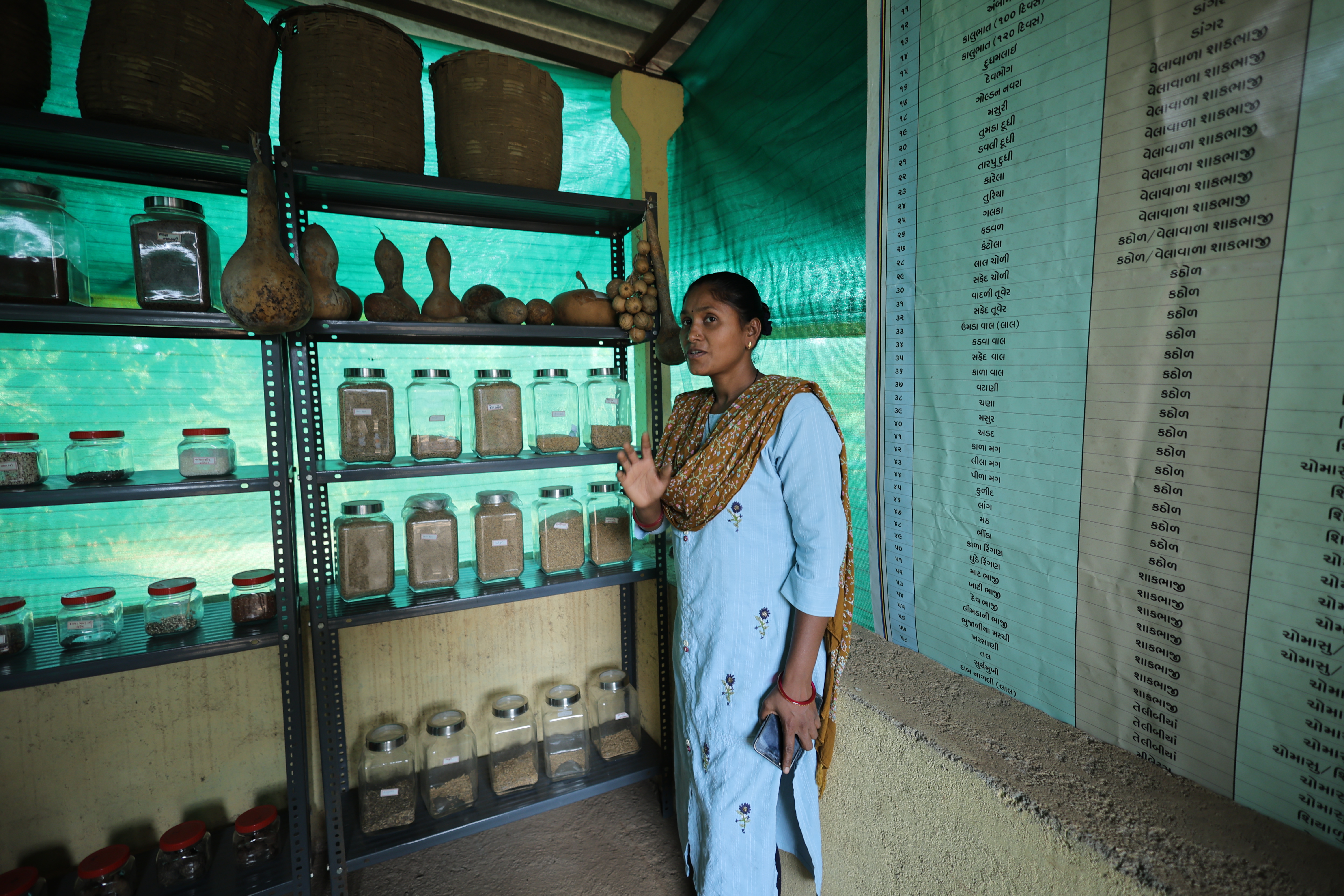
After this she took us to her farm behind her house and showed us her organic produce. We also had a privilege to observe the seed bank, an initiative by her collective. Waha, one of the women gave us fresh bore to taste. Jhabla (meaning changed from cloth to a plastic bag) mein bhar kar bhi diya. Bore khaaye aur uske beej ko zameen mein spit out kiya. Zameen se aaya aur wapas zameen mein chala bhi gaya. Un baheno ne bohot baar guest treatment dena chaha tab bohot embarrassed feel hua as if we are foreigners in our country. Jaha se aaye hain usko bhool kar aage badh rahe hain waha jiska koi pata hi nahi. As our day came to an end, we started packing up. On the other end Sushilaben started preparing to get back on the farm to work more before her day ended.
Sumitraben as a LOCAL enterprise Leader
The next morning hum nikal pade Sumitraben se milne. She was also a part of the Ujjas Mahila Khedut Sangathan. Unke ghar gaye toh achi chai mili aur bhajiya bhi khilaye unhone. She had already called up the sarpanch of her village to her home. Sumitraben had mentioned before how her in-laws had taunted them and hence they had to get a house of their own, but at least it was her own. She had mentioned that it was small. Unhone ghar dikhaya apna and I was surprised to find huge barrel-like bamboo structures used to store produce for future use. On one of them sat a clay vessel shaped like a tiny home, housing the goddess of grains, Kanseri, alongside silver coins and other sacred objects.
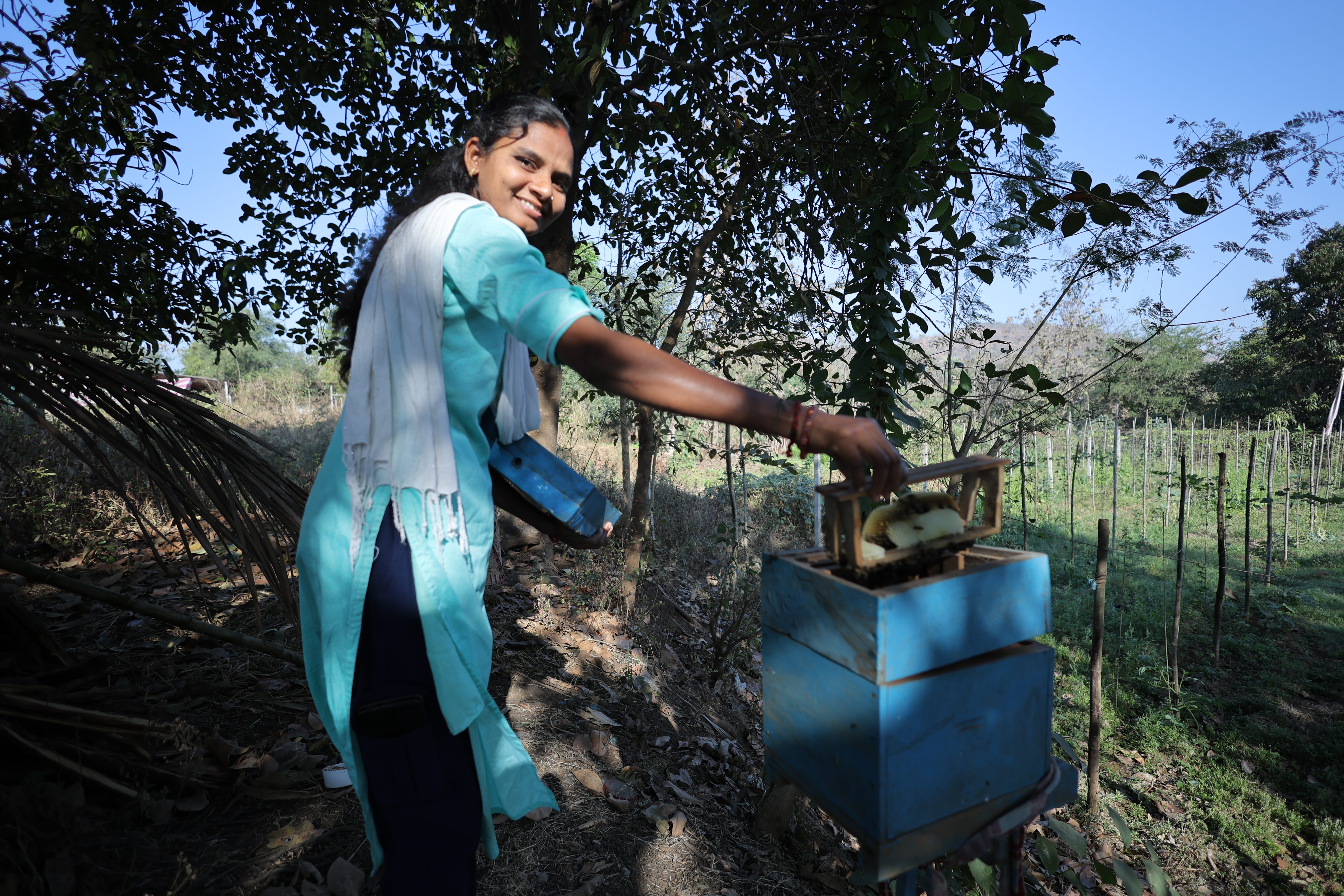
After this Sumitraben took us to her farm, showed her bee keeping skills from up close and the river behind her farm that brought water into her village. It was time to visit her Swa-bhumi Kendra at Vansda’s government office. She packed us some fresh imli to savor. On the way there, she talked about her family. She is a mother of four- three daughters before the birth of a son. All her children now stay at a hostel. This allows her to focus on household responsibilities, farm work, and strengthening her role as a collective leader.
In her conversations, she often reflected on the pain of not receiving help when she needed it. Once, her neighbours even refused to give her a vehicle to reach the hospital. Because of this, she now makes a conscious effort to help others in her community whether by taking extra food for other children along with her own at the hostel or by offering her vehicle when someone needs it.
beyond the farm
She taught her brother to run a shikanji stall after contributing to a panipani stall herself. We talked about MNREGA, its name change and how Ram had no relation to their kaam. She also mentioned how she advised her husband to take driving lessons which would further help both of them in their business. Sumitraben was a smart and an outspoken woman whose conversations had no filters to them. She talked about her experience of travelling to Ahmedabad (getting on a wrong train and getting off with support from her peers), staying at a hotel, eating restaurant food, polluted air, honking cars and finally drawing parallels to her lifestyle in the village.
We reached the government office where as soon as police officials saw her, they called out her name and greeted her. Her people skills shone through. We captured moments of her working at the Swa-bhumi kiosk, where she recalled how village middlemen created chaos when her collective secured a kiosk inside the government office. We exited Vansda as she had training to attend. It was on the Indian Constitution, the new labor laws and gender. At the training hall, the organisers welcomed us inside as they prepared an energiser for the Adivasi trainees. Sumitraben took her place to join her fellows for a “kraantikari” song as a part of celebrations for the International Women’s Day. It went something like “Auraton ne jabhi apni duniya ko badalna chaha, dharm unke raasto par adchane badhaane laga.”
Ekal Nari Shakti Manch: WHERE SINGLE WOMEN UNITE
Ab baari thi Jayshreeben ko milne ki, Ekal Nari Shakti Manch ki Pramukh. We went to Dholumber as per her Google location, picked her up and went to Toranvera, the workplace. The women invited us to a terrace-like open structure inside the house. There, we saw the items they produced. The same barrel-like storage structures stood nearby, while fresh air flowed in from all four sides. “Ekal Nari” referred to widows, deserted, divorced, or abandoned women. It also included women who were the sole earners when their partners were disabled. They had come together in response to the discrimination they faced in society.
The conversation began with them explaining about what all they produced- fresh spices, flour, pulses, everything packed in small quantities priced at 20 rupees each for sale in their local markets or the haat / hatvaadu. We sat down with them as the group insisted on waiting for one more member whose contribution had been immense to their collective. After she joined, they began with a song which celebrated their coming together. After this, they began sharing their experiences as ekal naris, from the many do’s and don’ts imposed on them to the way society branded single women as witches and subjected them to violence. In many cases, the community even denied them the right to attend their own children’s weddings and other festivities.
Jayshreeben talked about the onboarding of new members to the group. As part of this optional ritual, the group offered colourful clothes, jewellery, kumkum and makeup, things traditionally reserved for married women (suhaag). They did this in the presence of fellow ekal naris so the women could share confidence and motivate one another. She pointed out how most of these women avoided using the kumkum on their heads, the rest they tried to regain. Orthodox social norms have stripped away sringaar, an important aspect of a woman’s sexuality in Indian culture.
home to haat
After recalling such personal incidents, the group took us to a neighbouring terrace where they lay spices meant for drying. We had time before we left for the haat where they usually set up their stall. This was when Jayshreeben talked about how things had changed since her husband’s passing away. She raised her daughter and sent her son away to her brother’s. In between, she received a phone call from her son who was speaking to her about his board exams. He had just finished his exam, and their frustrated conversation made it clear that he had little interest in studies.
Jayshreeben talked about how COVID had necessitated parents to buy smart phones for their children, further ruining lives and careers. I could see minors riding two wheelers across their home on the village road to which Jayshreeben recollected memories of her son’s accident last year during her fellowship. For parents this was worrisome.
Jayshreeben recalled her dream of wanting to convert her collective into a cooperative as she talked about current struggles regarding stringent regulations. On a positive note, she showed me promotional videos of the collective shot by Mayank who resided right behind their workplace and had quite a following on Facebook. After we had a glass of sharbat, it was time to visit the haat. The concept behind these haats was fascinating. Every other day there would be one of these in a village public place where people had a chance to buy and sell fresh, affordable and small quantities of organic grocery among other items.
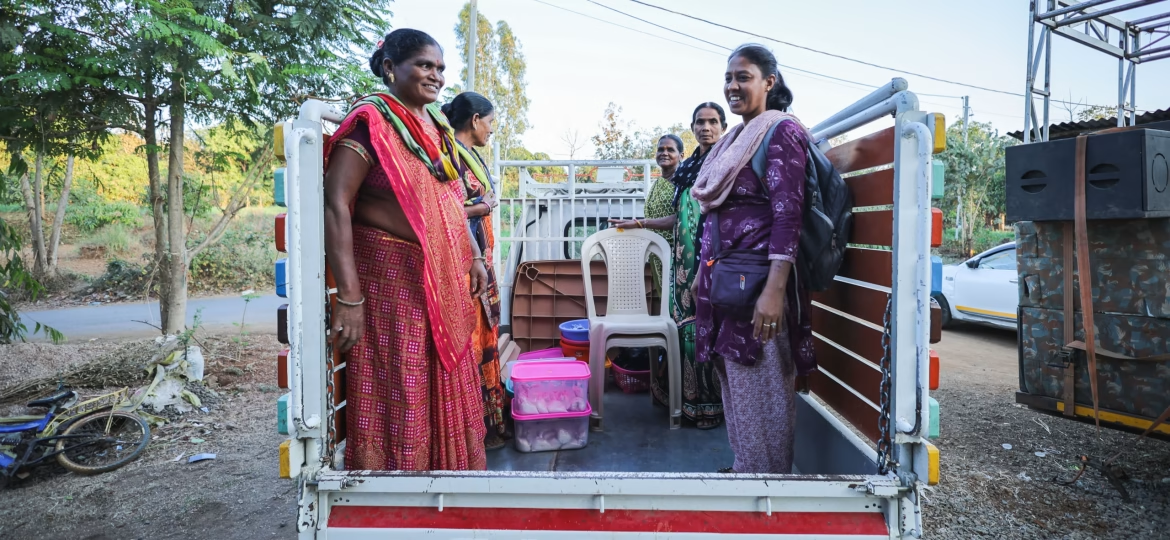
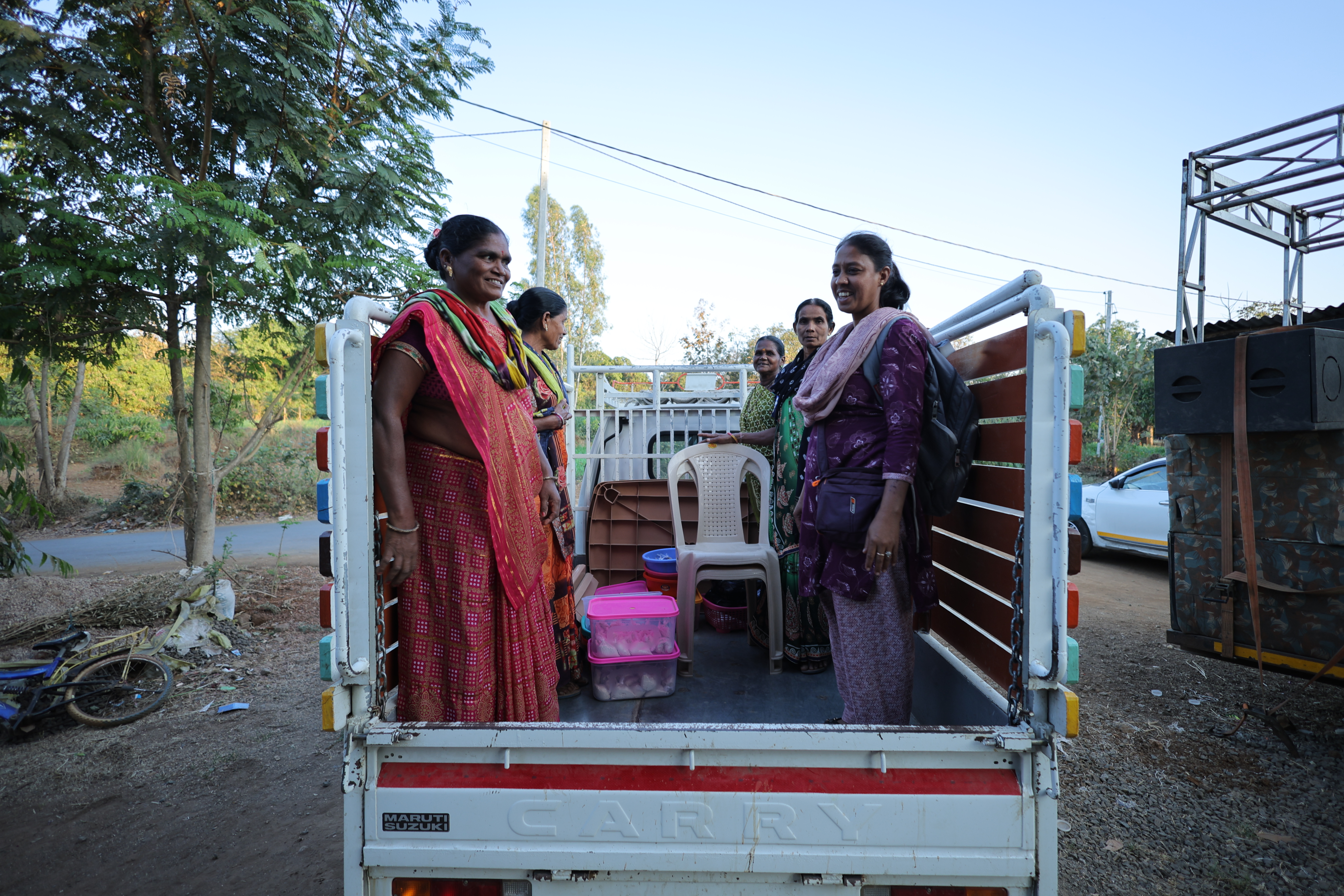
We waited for their neighbour to bring in his tempo. I hopped into the tempo with the group. Open blue sky, fading sun, fresh air and women on their way to set up their business. The Jamanpada haat takes place in the premises of the Mavli Mata temple. The Ekal Nari Shakti Manch set up their stall right in time. After an hour or so as we packed to leave, we bid goodbye to those who stayed back, conducting sales and also because it was difficult for one of them to detach and travel back alone.
Why Collective Solidarity Matters in Rural Gujarat?
That evening I sat with Anixaben (Program Implementation at Cohesion) talking about what had changed in the social sector. We talked about why strong leadership is necessary, especially as nationalist narratives increasingly influence people. With the type of aggressive media people are consuming and an increase in the bhaagwat (local religious leaders) culture especially in the rural parts of the country, things have become very uncertain. Hence reinstating radical means like the song Sumitraben and her fellow Adivasis were singing or the one sung by Jayshreeben and her unique collective describing their journey, becomes even more important.
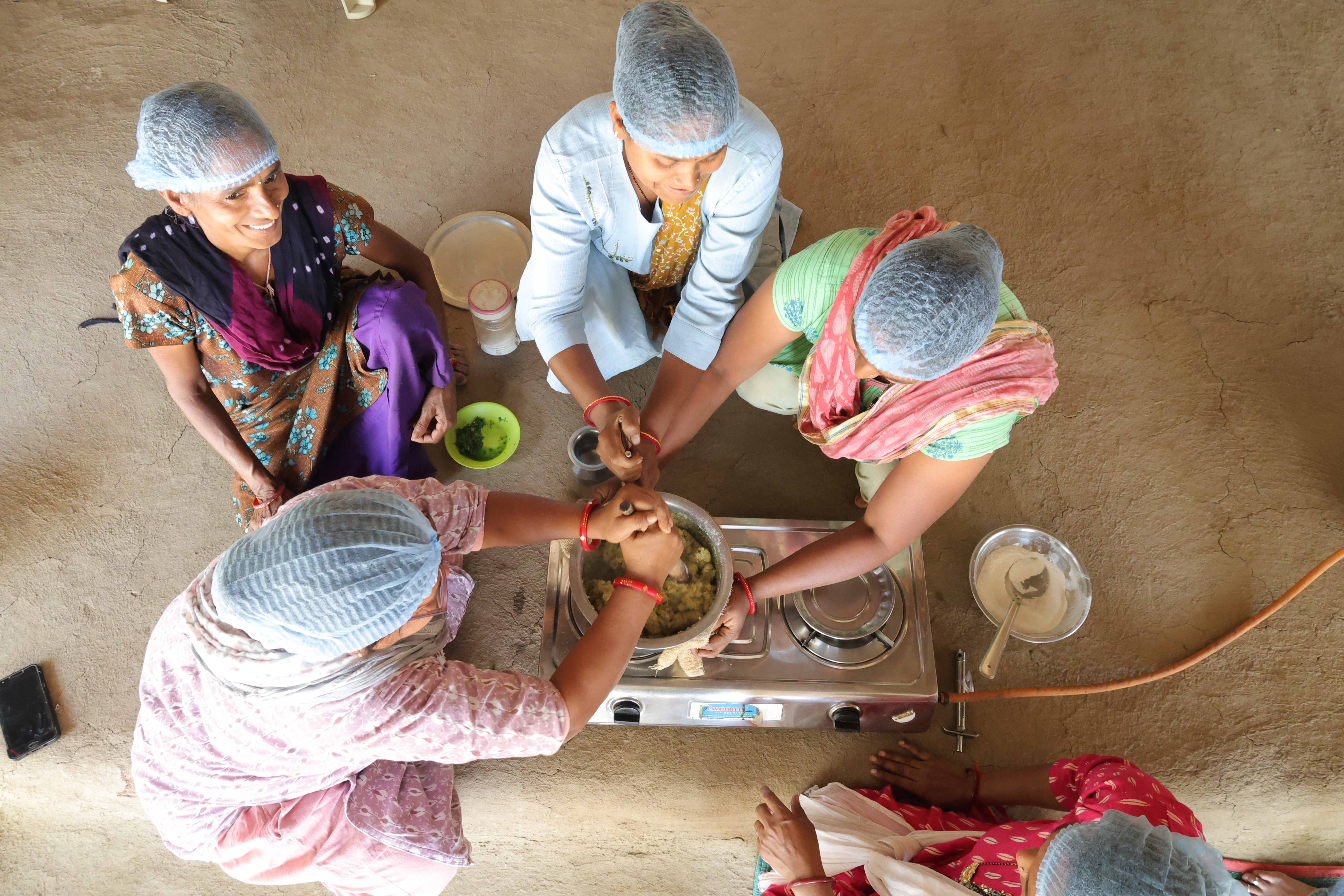
The whole team at SEWA Cooperative Federation is very grateful to Sushilaben, Sumitraben, Jayshreeben and all those who supported them in making this happen. From coordinating on the phone to managing frequent follow-ups and occasional cancellations, they patiently stayed in touch with us. In the end, they guided us through their busy schedules and made it possible for us to document a day in their lives.
References:
- https://www.thehindu.com/opinion/op-ed/caste-patriarchy-brand-women-as-witches/article69879559.ece
- https://maktoobmedia.com/india/dalit-youth-brutally-attacked-robbed-in-gujarat-third-caste-based-atrocity-in-21-days
- https://www.csohate.org/2026/01/13/hate-speech-events-in-india-2025
- https://cjp.org.in/mapping-gender-based-violence-in-india-trends-determinants-and-institutional-frameworks/
- https://www.thenewsminute.com/voices/how-convicted-godmen-are-repackaged-as-cultural-reformers
