


When a decision has no easy answer
Cooperative decision-making often raises a difficult question – should a cooperative take up work that brings immediate income, even if it shifts its long-term direction?
This was not a hypothetical question. It emerged in the recent AGM of Shri Gujarat Mahila SEWA Mahiti Communication Sahkari Mandali Ltd.
Video SEWA is a women-led cooperative that has, for decades, used video as a tool for development communication — producing films on organising, training, and advocacy that reach both grassroots communities and policy spaces. Built by women without formal filmmaking backgrounds, the cooperative represents a unique model of technology in the hands of informal workers.
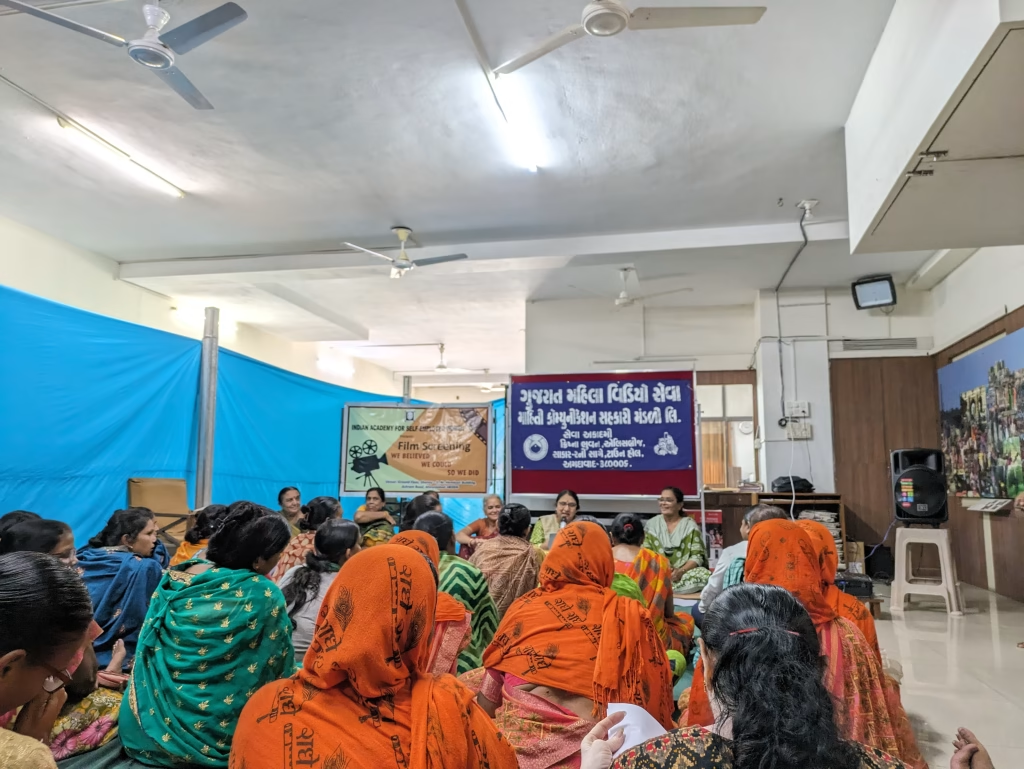
Today, it is a 40-member cooperative that has produced over 100 programmes, Yet, like many such enterprises, its work remains largely project-based, with income that is not always steady.
Within this context, members, who are trained videographers, found themselves debating a real choice.
Should they start offering videography services for birthday parties and small weddings?
The question seems simple. The decision is not.
WHat was being debated
On one side, members argued that the cooperative needs more consistent revenue. Documentary assignments and training modules do not always generate steady income. Taking up small event work could provide financial stability.
On the other side, members raised a different concern. Would this shift dilute the purpose of the cooperative? Should the focus instead be on strengthening the enterprise, bringing in younger members, and expanding the cooperative’s long-term vision?
The debate did not end there.
Another layer emerged. If the cooperative does not generate enough income today, how will it attract younger women to join for the future?
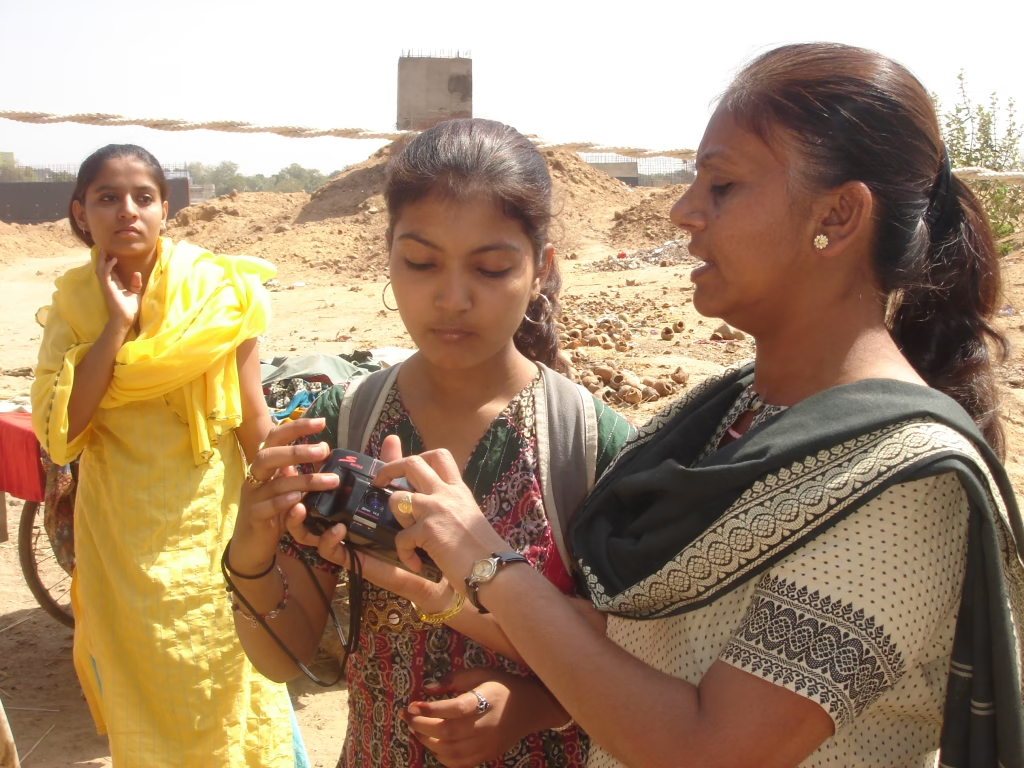
For a cooperative with modest annual earnings and largely project-based work, this was not a theoretical discussion. It was about survival, direction and most importantly, identity at the same time.
No resolution was reached in that meeting. And perhaps that is the point. In an informal women workers’ cooperative, the value is sometimes in sitting with the question long enough for everyone to genuinely own the answer, whenever it comes.
Why Cooperative decision-making takes time
In many organisations, such a decision would be taken quickly. Leadership would assess revenue potential and move forward.
The process of cooperative decision-making is different by design.
Members are not just workers. They are owners. Decisions must reflect multiple realities like income needs, collective purpose, future growth, and member aspirations.
The bye-laws that govern cooperatives, often introduced through trainings like Peta Kayda, require that such decisions are discussed, debated, and agreed upon through defined processes. General Body Meetings, quorum requirements, and voting structures, are not procedural hurdles. Instead, they are guardrails for the collective.
They ensure that decisions are not imposed. They are arrived at.
What capacity building enables
This kind of discussion does not happen automatically.
Members need to understand how to participate in meetings, how to present their views, how to listen to others. They also need to learn how to navigate disagreement without breaking the collective – a skill that is harder than it sounds, and more important than most governance trainings acknowledge.
Leadership training within SEWA Cooperative Federation focuses on exactly these capabilities. Facilitating discussions, building consensus while holding space for different perspectives are skills that are developed over time.
While the example from Video SEWA may seem specific, the underlying dilemma is common across sectors.
In agriculture cooperatives, farmers often debate whether to sell immediately after harvest or wait for better prices. In dairy, decisions emerge around pricing, procurement, distribution, second-line of leadership. In handicrafts, collectives must choose between bulk orders/job work that ensure income and custom work that builds identity and value.
In each case, there is no single correct answer. There are trade-offs.
Capacity building ensures that these trade-offs are understood, discussed and negotiated collectively – not decided by a few, and not avoided altogether.
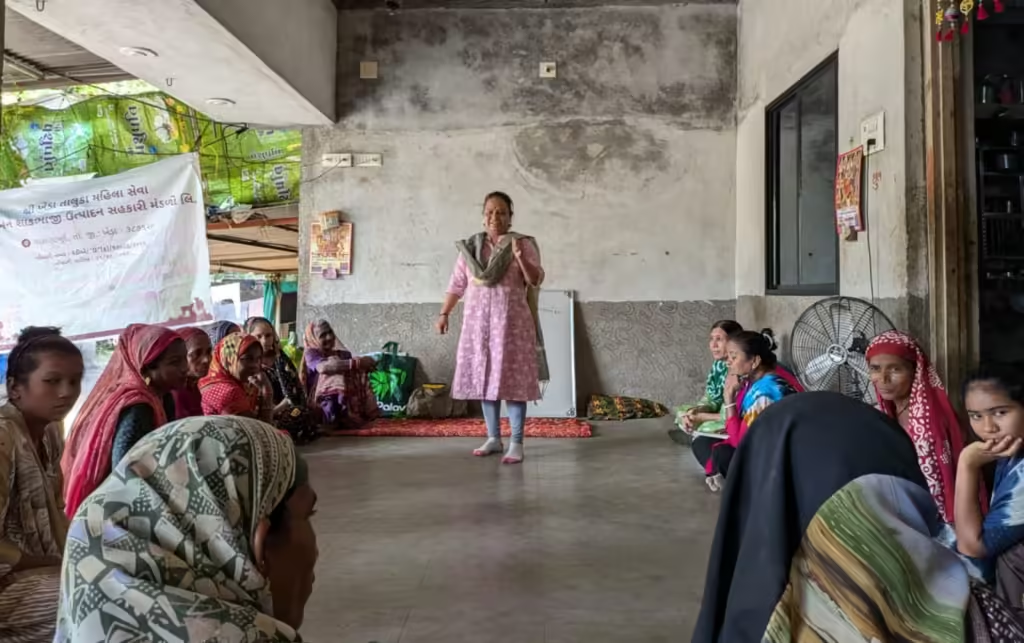
Without this investment, decision-making either becomes dominated by a few voices or gets delayed without direction. With it, even complex disagreements can move toward shared decisions.
Why Cooperative decision-making matters
Across informal women workers’ cooperatives, similar decisions appear again and again. They may not always be about videography services, but they carry the same tension – immediate income versus long-term direction, stability versus growth, individual benefit versus collective purpose.
This is why cooperative decision-making cannot be reduced to efficiency alone.
Taking time allows members to examine consequences, question assumptions and align on what the cooperative stands for. It also ensures that decisions are understood by those who will be affected by them.
This is especially critical in collectives where members’ livelihoods are directly linked to outcomes of these decisions. Decisions it can sustain.
Beyond one decision
The question Video SEWA is grappling with is not unique.
Across sectors, informal women workers’ collectives continuously navigate choices that shape their future. Whether it is entering new markets, changing product lines, or restructuring operations, these decisions involve trade-offs that cannot be resolved through a single perspective.
What matters is not only what decision is taken, but how it is taken. Because in a cooperative, the process shapes the legitimacy of the outcome. When members are part of the discussion, even difficult decisions are more likely to hold.


INside wess
At SEWA Cooperative Federation, cooperative decision-making is treated as a continuously built capability supported through governance trainings like Peta Kayda and leadership development initiatives that help informal women workers’ cooperatives navigate complex choices without losing their democratic character.
