

Rethinking Climate Security for Informal Women Workers
Introduction: beyond a single tool
At the recently held Mumbai Climate Week in February 2026, conversations around climate finance focused heavily on instruments and dashboards. But a deeper question remains: what does climate adaptation for informal women workers actually require in practice?
Among these, parametric insurance — with its promise of rapid, trigger-based payouts during extreme heat and rainfall — was framed by many as a breakthrough solution for managing climate risk.
Parametric insurance is an important innovation. It reduces delays in compensation, simplifies claims, and offers clarity around triggers. But for informal women workers whose lives and livelihoods are intricately woven with climate stress, adaptation requires a broader ecosystem of support.
This article explores why adaptation must be viewed as a layered, systemic process. One that goes beyond instruments to encompass livelihood security, care burdens, health risks, market volatility, and structural exclusion.
What parametric insurance actually does
To understand its limitations, it helps first to understand what parametric insurance does well.
Parametric insurance pays out when a predefined climatic threshold is crossed – for example, when a location records a daily maximum temperature above 43.2°C for a certain duration. It does this quickly and objectively because the trigger is data-driven, not based on loss adjustment (the orthodox way).
This design makes it well-suited for covering losses that are closely tied to measurable weather events. It can help smooth consumption, prevent distress borrowing, and offer financial relief in the immediate aftermath of extreme heat. In contexts where traditional indemnity insurance is weak, slow, or inaccessible, parametric products can widen the safety net.
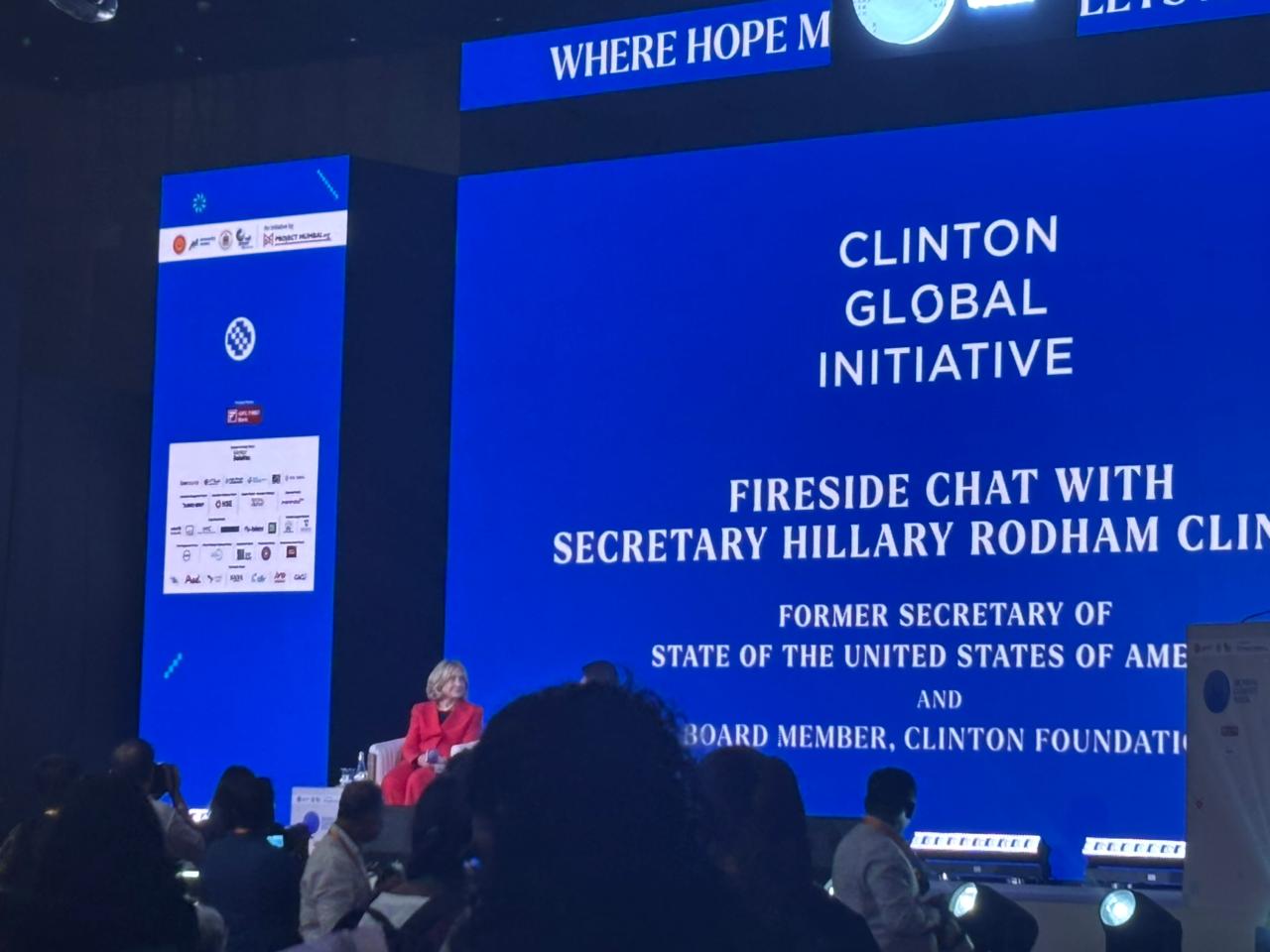
At Mumbai Climate Week, global leaders including Hillary Clinton referenced grassroots innovations in climate insurance that have expanded coverage for hundreds of thousands of previously unserved women. Her remarks underscored the value of locally developed tools — and the potential for scaling such models.
Acknowledging this, however, should not prevent us from asking a deeper question: Can a single payout meaningfully offset the layered risks — livelihood, care, health and market volatility — that compound during climate stress?
The Layers of insecurity
For informal women workers, climate risk is not a single shock— which is why climate adaptation for informal women workers must account for layered vulnerabilities. It is an accumulation of stresses that reinforce each other over time, many of which lie outside the scope of single instruments like insurance.
- Livelihood Layer – Across trades – agriculture, street vending, construction, waste recycling, and home-based production – heat erodes productivity and income. In rural areas, soil moisture loss and crop stress reduce yields; in cities, outdoor workers struggle to maintain pace as temperatures rise. Research with over 1,100 informal women workers shows that extreme heat could reduce working hours for them by nearly 6 percent by 2030. These losses do not always coincide with a defined extreme event. Gradual heat increase, erratic rainfall, or humidity spikes may not trigger an insurance payout but still erode income and productivity.
- Care and Household Layer – Heat intensifies unpaid care work. Women shoulder the burden of fetching water during hotter hours, nursing sick family members, and managing household cooling with unreliable power supplies. In many rural areas, frequent power outages further complicate cooling, water access and food storage.
- Health Layer – Exposure to high temperatures contributes to dehydration, respiratory issues, musculoskeletal strain, sleep disruption, and chronic stress. Informal workers often lack access to quality health care and may delay seeking treatment to avoid lost wages, increasing out-of-pocket expenses. Health shocks are climate impacts too — yet they are rarely integrated into climate financing or adaptation planning.
- Workspace Layer – For women working at home, rising indoor temperatures — often unrecorded by official weather stations — reduce productivity. In some cases, indoor temperatures can exceed 50°C. Poor ventilation, dense hearths, and heat retention in old buildings make adaptation in the built environment particularly difficult.
The DATA CONVERSATIOn: WHAT gets measured
In a panel discussion on climate data, experts debated how best to strengthen dashboards for adaptation decision-making. Topics included night-time temperature and humidity measurement – important refinements to existing indices.
Yet what struck many practitioners was how much of women’s lived risk — unpaid care, gradual productivity loss, health expenditure, household vulnerability — remains off most dashboards. Temperature thresholds can be precise, social vulnerabilities are rarely so.
If “what gets measured gets managed,” then we must ask: what elements of risk are we failing to record? And how do those omissions shape the solutions we fund?
SEWA’s Holistic Approach to climate adaptation for informal women workers
SEWA’s cooperative ecosystem has long recognized that risk cannot be unbundled into neat financial products alone. For decades, SEWA’s work has combined multiple elements that undergird real resilience:
- Livelihood resilience: Supporting agriculture, livestock, home-based production, and non-farm enterprises.
- Climate-smart practices: Training women to integrate ecological farming and soil health.
- Collective governance: Strengthening cooperatives’ decision-making capacity and market access.
- Financial inclusion: Savings group, working capital, enterprise finance.
- Health access: Primary health support, care linkage
- Policy engagement: Advocating for social protection and gender-responsive climate governance
This sankalit (integrated) approach does not conceive of insurance as the answer – but as one strand in a broader net of security.
Conclusion: REframing adaptation
Effective climate adaptation for informal women workers will not be found in any single instrument. It is a long-term process of strengthening systems that support people before, during and after climatic stress. For informal women workers, this means:
- Reducing exposure through better production systems
- Increasing absorptive capacity through social and financial safety nets
- Enhancing adaptive capacity through knowledge, governance, market access
- Transforming vulnerability through collective power and policy engagement
Parametric insurance plays a (better) role when it is part of the larger architecture.
It’s high time we think less in terms of singular solutions and more in resilient systems—ones that are more versatile for women workers to thrive despite the climate stress.
You can read about our pilot on Parametric Insurance with VimoSEWA National Insurance Cooperative here.
